Heart Attack Warning Signs: 6 Symptoms You Should Take Seriously

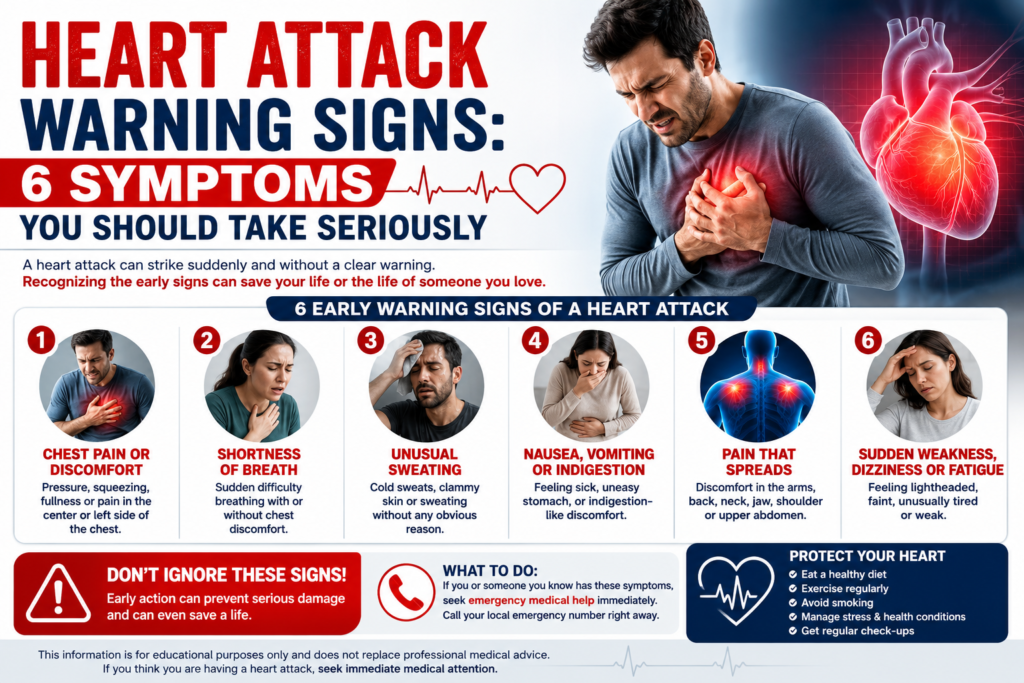
Heart Attack Warning Signs: 6 Symptoms You Should Take Seriously
A heart attack can happen suddenly, but the body may sometimes give warning signs before the situation becomes severe. Recognizing these symptoms can help a person seek medical attention sooner.
Many people associate a heart attack only with intense chest pain. However, symptoms can vary considerably. Some people experience pressure or discomfort in the chest, while others may notice shortness of breath, unusual sweating, nausea, dizziness, or unexplained tiredness.
Knowing the potential warning signs is important because early medical treatment can be critical when a heart attack is occurring.
This article explains six symptoms that should be taken seriously and discusses when emergency medical attention may be necessary.
Important: This article is for general educational purposes and does not replace medical advice. If you think you or someone else may be having a heart attack, seek emergency medical care immediately.
What Is a Heart Attack?
A heart attack, medically known as a myocardial infarction, occurs when blood flow to part of the heart muscle becomes blocked or severely reduced.
The heart needs a continuous supply of oxygen-rich blood. When a coronary artery becomes blocked, the affected heart muscle may not receive enough oxygen. Without prompt treatment, the heart muscle can become permanently damaged.
A heart attack is a medical emergency. Symptoms may be obvious, but they can sometimes be mild or unusual, particularly in some older adults, people with diabetes, and women.
That is why understanding a range of possible symptoms is more useful than focusing on chest pain alone.
1. Chest Pressure, Pain or Discomfort
Chest discomfort is one of the best-known warning signs of a heart attack.
People may describe the sensation differently. It can feel like pressure, squeezing, fullness, heaviness, tightness, or uncomfortable pain in the center or left side of the chest.
The discomfort may last for several minutes, disappear, and then return. In some cases, it may become stronger with time.
Not every episode of chest pain means a heart attack. Indigestion, muscle strain, acid reflux, anxiety, and other conditions can also cause chest discomfort.
However, new, unexplained, persistent, or severe chest discomfort should never be ignored, particularly when it occurs together with other symptoms.
If someone experiences possible heart-attack symptoms, it is safer to seek urgent medical evaluation rather than attempting to determine the cause at home.
2. Shortness of Breath
Unexpected difficulty breathing can be another warning sign.
Shortness of breath may occur with or without chest discomfort. A person may feel as though they cannot get enough air, become unusually breathless during a normal activity, or have difficulty breathing while resting.
Because breathlessness has many possible causes, it can be easy to dismiss it.
For example, asthma, respiratory infections, anemia, anxiety, and other heart or lung conditions can cause shortness of breath.
However, sudden or unexplained breathing difficulty—especially when accompanied by chest pressure, sweating, nausea, dizziness, or unusual weakness—requires prompt medical attention.
Do not assume that the absence of chest pain means a heart attack is impossible.
3. Unusual Sweating
Breaking into a cold or unusual sweat without an obvious reason can sometimes accompany a heart attack.
This may feel different from normal sweating caused by exercise, hot weather, or physical activity. A person may suddenly become clammy or sweaty even while sitting or resting.
Unusual sweating by itself does not prove that someone is having a heart attack. Many other conditions can cause sweating, including fever, anxiety, low blood sugar, hormonal changes, and infections.
The important consideration is whether the sweating occurs together with other concerning symptoms.
For example, sudden sweating combined with chest discomfort, shortness of breath, nausea, dizziness, or weakness should be treated seriously.
4. Nausea, Vomiting or Indigestion-Like Discomfort
Some people experiencing a heart attack may develop nausea, vomiting, or discomfort that feels similar to indigestion.
This can make recognition difficult because digestive problems are common and usually harmless.
A person might think they simply ate something that did not agree with them. However, unexplained nausea or upper-abdominal discomfort occurring together with other heart-related symptoms should not be dismissed.
Women may experience symptoms that differ from the classic picture of a heart attack, although symptoms overlap between men and women and there is no single symptom pattern that applies to everyone.
If digestive symptoms are sudden, unusual, severe, or accompanied by chest discomfort, breathing problems, sweating, weakness, or dizziness, seek urgent medical evaluation.
5. Pain or Discomfort That Spreads
Heart-attack discomfort does not necessarily stay in the chest.
Pain or discomfort may spread toward the shoulder, arm, back, neck, jaw, or upper abdomen.
Some people may notice discomfort primarily in one area rather than experiencing obvious chest pain.
For example, unexplained pressure or discomfort in the chest that moves toward the arm or jaw can be a warning sign requiring immediate attention.
Again, these symptoms can have causes unrelated to the heart. A pinched nerve, muscle injury, arthritis, dental problems, or other conditions can cause pain in similar areas.
The combination of symptoms matters.
When unusual pain or pressure occurs together with symptoms such as breathlessness, sweating, nausea, or chest discomfort, it should be evaluated urgently.
6. Sudden Weakness, Dizziness or Unusual Fatigue
Some people may experience unusual weakness, lightheadedness, dizziness, or extreme tiredness during a heart attack.
The sensation may be difficult to describe. A person might suddenly feel weak, unsteady, faint, or unable to perform a normal activity.
Unusual fatigue can be particularly easy to overlook when it develops gradually.
However, sudden unexplained weakness or dizziness accompanied by chest discomfort, shortness of breath, sweating, nausea, or other concerning symptoms should not be ignored.
If a person loses consciousness or becomes severely unwell, emergency medical assistance is needed immediately.
Can Heart Attack Symptoms Be Different in Women?
Yes. Heart-attack symptoms can vary from person to person, and women may sometimes experience symptoms that are less typical than the classic crushing chest pain often shown in movies.
Possible symptoms can include chest discomfort, shortness of breath, unusual tiredness, nausea, sweating, dizziness, or pain in the back, neck, jaw, shoulder, or arm.
This does not mean that women experience completely different symptoms. There is significant overlap between men and women.
The important point is that a heart attack cannot be ruled out simply because a person does not have dramatic chest pain.
What Is a Silent Heart Attack?
A silent heart attack is a heart attack that occurs with few, mild, or unusual symptoms and may not be recognized at the time.
Some people may mistake symptoms for indigestion, tiredness, muscle pain, or another minor problem.
Silent heart attacks can still damage the heart. Therefore, people should discuss unexplained or recurring symptoms with a healthcare professional, especially if they have risk factors for cardiovascular disease.
When Should You Seek Emergency Help?
Do not wait for symptoms to become unbearable before seeking help.
If you or someone around you develops possible heart-attack symptoms—particularly chest pressure or discomfort accompanied by breathing difficulty, sweating, nausea, dizziness, or pain spreading to the arm, back, neck, or jaw—treat the situation as an emergency.
Contact your local emergency medical service and follow the instructions provided by medical professionals.
Avoid driving yourself to the hospital if emergency medical transport is available. Emergency responders can begin appropriate assessment and care while transporting the patient.
If someone becomes unconscious and is not breathing normally, emergency services should be contacted immediately and CPR should be started if appropriate and if you know how to perform it.
Why Early Action Matters
The heart muscle depends on oxygen-rich blood. When blood flow is blocked, damage can increase as time passes.
Getting medical attention quickly can allow healthcare professionals to determine whether a heart attack is occurring and begin appropriate treatment.
This is one reason recognizing warning signs is so important.
It is better to have a concerning symptom checked and discover that it was caused by something less serious than to ignore a genuine emergency.
Common Heart Attack Risk Factors
Heart attacks can affect different people, but certain factors can increase cardiovascular risk.
These include:
- High blood pressure
- High cholesterol
- Diabetes
- Smoking or tobacco use
- Obesity
- Physical inactivity
- A family history of heart disease
- Increasing age
- Certain medical conditions
Having one or more risk factors does not mean a person will definitely have a heart attack. Likewise, someone without obvious risk factors can still experience one.
Regular medical checkups can help identify conditions such as high blood pressure, high cholesterol, or diabetes that may otherwise go unnoticed.
How Can You Support Heart Health?
Heart health is influenced by many long-term habits.
Eating a balanced diet that includes vegetables, fruits, whole grains, legumes, and other nutrient-rich foods can support overall cardiovascular health.
Regular physical activity is also important. Adults should follow appropriate physical-activity recommendations based on their health and fitness level.
Avoiding tobacco is another major step toward protecting cardiovascular health.
It is also useful to manage conditions such as high blood pressure, diabetes, and high cholesterol according to advice from a healthcare professional.
Getting enough sleep, managing stress, maintaining a healthy weight, and attending recommended health checkups can also contribute to overall heart health.
However, healthy habits do not eliminate the possibility of a heart attack, so warning symptoms should always be taken seriously.
Frequently Asked Questions
What is the most common warning sign of a heart attack?
Chest pressure or discomfort is one of the most recognized symptoms, but heart attacks can cause different symptoms in different people.
Can a heart attack happen without chest pain?
Yes. Some people experience symptoms such as shortness of breath, nausea, unusual sweating, dizziness, weakness, or discomfort in the back, neck, jaw, shoulder, or arm.
Can indigestion feel like a heart attack?
Yes. Some heart attacks can cause symptoms that resemble indigestion. Because the symptoms can overlap, unexplained or concerning symptoms should be medically evaluated.
Are heart attack symptoms different for women?
Symptoms can vary among individuals. Women may experience typical chest discomfort as well as symptoms such as shortness of breath, nausea, unusual fatigue, sweating, dizziness, or discomfort in other areas.
What should I do if I suspect a heart attack?
Treat possible heart-attack symptoms as an emergency. Contact your local emergency medical service and follow the instructions of emergency professionals.
Final Thoughts
Heart attacks do not always look the way people expect. Chest pressure is an important warning sign, but symptoms can also include shortness of breath, unusual sweating, nausea, spreading discomfort, dizziness, weakness, or unexplained fatigue.
Recognizing these signs can help people act sooner.
Most importantly, do not try to diagnose a possible heart attack yourself. If symptoms are sudden, severe, unusual, or occur together in a concerning pattern, seek emergency medical attention.
A few minutes of caution can be far more valuable than ignoring a potentially serious warning.
